
Justice
Courthousenews.com’s False and Defamatory Reporting Concerning Slade Douglas


MATERIALLY MISLEADING AND DEFAMATORY REPORTING OF A $6,789,000 FEDERAL CIVIL RIGHTS JUDGMENT
Nov. 6. 2026
TO: bgirdner@courthousenews.com <bgirdner@courthousenews.com>; cmarshall@courthousenews.com <cmarshall@courthousenews.com>; home@courthousenews.com <home@courthousenews.com>; support@courthousenews.com <support@courthousenews.com>; wdotinga@courthousenews.com <wdotinga@courthousenews.com>
TO: Courthouse News Service Executive Leadership, Editorial Leadership, Legal Counsel, and Oversight Officials
I am writing to demand the immediate correction and/or retraction of materially misleading, defamatory, and factually inaccurate statements and representations published by Courthouse News Service in its September 1, 2026 article, “LAPD renews reputation for abuse with $6.6 million jury award,” authored by Quinn Welsch.
Article: https://www.courthousenews.
I am a United States Army veteran, former law-enforcement officer, veterans advocate, and the prevailing plaintiff in Douglas v. City of Los Angeles, et al., Case No. 2:20-cv-07439-MEMF-MAR, in the United States District Court for the Central District of California.
What makes your publication particularly disturbing is that it acknowledges a federal jury verdict and the federal court’s rejection of the defendants’ effort to obtain a new trial, yet perpetuates the very government narrative whose legal justification the jury rejected. Even more troubling, Courthouse News specializes in reporting judicial proceedings, making its failure to accurately distinguish established constitutional violations from government-generated narratives particularly indefensible.
On December 23, 2025, a federal jury returned a $6,789,000 verdict in my favor, including $173,000 in punitive damages against two LAPD officers. The jury found liability for First Amendment retaliation, unconstitutional seizure, false imprisonment, violations of the Americans with Disabilities Act, and other unlawful conduct.
Critically, the jury expressly determined that neither officer possessed probable cause to detain me pursuant to California Welfare and Institutions Code § 5150.
On August 26, 2026, U.S. District Judge Maame Ewusi-Mensah Frimpong denied the defendants’ motion for a new trial and upheld the damages award. The court’s ruling recognized the public-interest significance of vindicating constitutional rights and the potential deterrent effect of the verdict on future government misconduct. The ruling also invoked judicial authority addressing the public interest served by litigation challenging “lawless, unconstitutional conduct.”
These findings are not peripheral details. They are central to understanding what happened and why the federal jury held the defendants accountable.
Yet your article opens by portraying me as a frustrated veteran whose interaction with a Veterans Affairs crisis hotline operator prompted a purported welfare check.
That characterization is precisely the problem.
The publication’s framing creates the materially misleading and stigmatizing impression that my emotional state prompted an otherwise legitimate governmental intervention, rather than accurately conveying that government officials engaged in unconstitutional conduct for which a federal jury held them liable.
The constitutional violations were established. The officers’ liability was determined. The damages award was upheld. Yet your publication continues to frame the incident through the government’s original justification rather than the judicial findings that exposed the unlawfulness of its conduct.
This is not merely selective reporting. It creates a damaging and potentially defamatory implication concerning the very individual whose constitutional rights were vindicated in federal court.
A government-generated assertion is not a judicial finding. A disputed mental-health label is not proof of suicidal intent. And a report made to law enforcement does not, merely by existing, establish lawful authority to deprive an American citizen of liberty.
Moreover, your article attributes to me a statement concerning whether I posed a danger to myself or others that I did not make to those officers. That attribution requires substantiation or correction, not further repetition as an established fact.
The federal jury’s findings make these distinctions indispensable.
Your article fails to give readers that critical constitutional context while perpetuating the very characterization used to justify the government’s actions.
I was not arrested because I committed a crime. I called 911 after revoking consent and demanding that officers leave my residence. The jury subsequently found that the officers retaliated against me for exercising my First Amendment rights.
I have consistently maintained that the Department of Veterans Affairs initiated a retaliatory swatting incident following my advocacy for veterans and complaints about government misconduct. LAPD officers arrived without a warrant, and what followed was a retaliatory arrest and forced hospitalization.
At PIH Good Samaritan Hospital, I was restrained, drugged, subjected to forced testing, and sexually assaulted by instrument in an effort to fabricate evidence and justify what had already taken place.
No drugs were found. After seven hours I were released.
These events cannot be accurately understood by reducing the case to an ostensibly legitimate mental-health intervention.
Your article further describes my constitutional violations through the language of allegations, stating that I claimed the officers retaliated against me and violated my civil rights, despite the fact that those violations had already been established by a federal jury.
That distinction is fundamental.
I did not merely claim First Amendment retaliation. The jury found First Amendment retaliation.
I did not merely claim an unconstitutional seizure. The jury found an unconstitutional seizure.
I did not merely claim false imprisonment. The jury found false imprisonment.
And the federal court subsequently upheld the substantial damages award.
To continue presenting adjudicated constitutional violations primarily as unresolved accusations, while simultaneously perpetuating the government’s disputed justification, creates a grotesque inversion of constitutional accountability: the government can violate an individual’s constitutional rights, be held liable in federal court, and nevertheless have its original narrative perpetuated through purportedly authoritative judicial reporting.
That is not an acceptable substitute for accurate reporting.
Equally troubling, your article misidentifies Paul Hoffman as my trial attorney and portrays Na’Shaun Neal as though he remained my legal representative, despite the fact that Hoffman’s representation ended years earlier and I formally terminated Peter L. Carr IV, Na’Shaun Neal, Lauren McRae, and the PLC Law Group legal team, expressly revoking their authority; none of these attorneys was authorized to represent me when your article was published.
Your headline compounds the misleading presentation by emphasizing $6.6 million when the actual final judgment totaled $6,789,000, including punitive damages imposed against the individual officers.
Although $6.616 million represents the compensatory component, the punitive damages are especially significant because they reflect the jury’s decision to impose punishment beyond compensation.
Reducing the headline to the compensatory award diminishes the visibility of that important finding.
Moreover, your article gives substantial attention to the defendants’ unsuccessful arguments, an officer’s employment circumstances, and a limited post-trial ruling concerning negligent supervision while failing to explain the broader constitutional and public-policy significance of the outcome.
That editorial imbalance matters.
The federal litigation was not merely a disagreement about the amount of money awarded to an injured plaintiff or the City’s supervision of an officer.
It established liability for violations of constitutional and statutory rights and resulted in a judgment of nearly $6.8 million.
The fundamental question is why a veteran who committed no crime was subjected to a deprivation of liberty that a federal jury subsequently found unlawful.
The answer cannot be obscured by repeating the government’s preferred characterization or presenting established constitutional violations as unresolved allegations.
This is especially troubling coming from Courthouse News Service, a publication whose professional credibility depends upon accurately reporting judicial proceedings and holding governmental institutions accountable through the examination of court records.
I am the veteran whose constitutional rights were vindicated.
I served this country. I defended the Constitution. I advocated for fellow veterans. And when government officials violated my rights, I exercised those same rights to hold them accountable in federal court.
I prevailed.
No veteran should have to fight a seven-year civil-rights battle, obtain a multimillion-dollar federal judgment, and then confront a publication specializing in judicial reporting for continuing to elevate the government’s disputed characterization over the legal significance of the verdict.
The ethical responsibility of a judicial publication does not end with reporting a monetary award.
It includes recognizing when government officials’ actions expose a systemic constitutional failure capable of threatening the liberties of countless others.
That is precisely why I developed the Slade Douglas Liberty Act.
The proposed legislation addresses the constitutional danger created when administrative or psychiatric labels are treated as substitutes for evidence, due process, and lawful judicial authority.
Its central principle is straightforward: Freedom cannot be taken by label. Liberty requires due process.
If someone accused of committing a crime receives constitutional protections, why should someone accused of no crime receive fewer protections simply because the government assigns a label?
A welfare check is not a warrant. A mental-health assertion is not a judicial determination. And government officials cannot manufacture constitutional authority through terminology.
This is a profound issue of veterans’ rights, civil liberties, governmental accountability, and institutional reform.
Courthouse News Service has an opportunity to advance public understanding of that issue rather than perpetuate the framing used to justify the original detention.
Because Courthouse News Service specializes in reporting judicial proceedings, this matter demands institutional accountability from its executive leadership, editorial management, legal counsel, and those responsible for overseeing journalistic standards. I therefore formally request a substantive written response and independent editorial review addressing the article’s materially misleading implications, inaccurate representations, misidentification of former counsel, and failure to accurately convey the federal jury’s findings. A publication entrusted with reporting the work of the judiciary must hold itself accountable when its reporting perpetuates materially misleading government narratives concerning a veteran whose constitutional rights were vindicated by a federal jury. Moreover, the federal court expressly recognized that the verdict “served the public interest by vindicating important constitutional rights,” underscoring that this case represents far more than an individual legal victory. It is a matter of profound public significance involving governmental accountability, the preservation of constitutional liberties, and the protection of every veteran and American from lawless, unconstitutional government conduct.
I further request preservation of all materials concerning the preparation, sourcing, editorial review, publication, republication, and subsequent modification of the article, including relevant internal communications and correspondence with sources, consistent with applicable preservation obligations.
I also invite Courthouse News Service to use its platform for a far more constructive purpose.
Educate the public about constitutional rights.
Examine how government systems intended to provide assistance can instead become instruments of coercion when proper safeguards are absent.
Report the legal findings with the seriousness they deserve.
And examine the Slade Douglas Liberty Act as a proposed means of preventing similar constitutional violations.
A publication dedicated to reporting judicial proceedings should be among the first to recognize the danger when an American citizen’s constitutional rights are disregarded under the appearance of governmental assistance.
The implications extend beyond me, beyond the LAPD, and beyond Los Angeles.
They concern every veteran and every American whose freedom depends upon constitutional safeguards being enforced before an unlawful seizure occurs, not merely vindicated after years of litigation.
This demand does not ask your publication to accept every disputed characterization I have advanced. It demands that your editors distinguish contested government assertions from findings established through the judicial process, correct materially misleading impressions and factual inaccuracies, and avoid misleading readers about what the jury actually decided.
The federal jury has spoken.
The federal court has upheld the damages award and denied a new trial.
The constitutional significance of this case cannot responsibly be reduced to a mental-health narrative whose asserted legal basis the jury rejected.
Courthouse News Service must decide whether it will uphold the integrity of the federal judicial record or continue using its institutional platform to perpetuate a stigmatizing government narrative while obscuring the constitutional violations established against the defendants.
The public deserves more than selective reporting.
Veterans deserve the truth, constitutional accountability, and a judicial publication willing to accurately report governmental misconduct even when the findings expose lawless, unconstitutional conduct by public officials.
I expect a substantive written response and appropriate corrective action.
Very Truly Yours,
Slade Douglas
United States Army Veteran
Veterans Advocate
Founder, Slade Douglas Liberty Act


TO: The Editors and Legal Department of Military.com
adam.g@military.com, amanda.m@military.com, douglas.1@military.com, nick.m@military.com
FROM: Slade Douglas
RE: FORMAL DEMAND FOR RETRACTION AND PUBLIC ACCOUNTABILITY — Military.com’s False and Defamatory Reporting Concerning Slade Douglas
I am writing to demand the immediate correction and/or retraction of Military.com’s coverage concerning me, Slade Douglas, and my federal civil-rights case against the City of Los Angeles and LAPD officers. (https://www.military.com/
I am a United States Army veteran, former law-enforcement officer, veterans advocate, and the prevailing plaintiff in Douglas v. City of Los Angeles, et al., Case No. 2:20-cv-07439-MEMF-MAR, in the United States District Court for the Central District of California.
On December 23, 2025, a federal jury returned a multimillion-dollar verdict in my favor, including punitive damages against individual LAPD officers. The City and officers subsequently sought post-trial relief. On August 26, 2026, the federal court rejected their effort to obtain a new trial and expressly recognized that my victory “served the public interest by vindicating important constitutional rights,” describing the underlying conduct as “lawless, unconstitutional conduct.” The Court further recognized the deterrent and public-policy significance of the litigation.
Against that record, Military.com published an account on Sept. 2 that perpetuates false, materially misleading, and rejected narratives concerning what happened to me while omitting critical facts necessary for readers to understand the case and the verdict.
This was not simply the benign intervention suggested by the narrative presented to your readers. I have consistently maintained that I was swatted after advocating for veterans and challenging government conduct. LAPD officers arrived without a warrant. I called 911 myself. What followed ultimately became the subject of a federal civil-rights trial at which a jury found in my favor and imposed punitive damages. The federal court then refused to disturb that result through a new trial.
Presenting allegations or labels used to justify government conduct as though they constitute an established account of what actually occurred is particularly damaging after a federal jury verdict and post-trial judicial findings demonstrating the constitutional gravity of the case. Material omissions can likewise create a fundamentally false impression when readers are denied the adjudicated facts and context necessary to understand the story.
This is especially troubling coming from Military.com.
Your publication serves veterans. I am one of those veterans.
I served this country. I became an advocate for other veterans. And after prevailing before a federal jury in litigation arising from government conduct against me, I should not have to watch a publication dedicated to the military community perpetuate a narrative that obscures the constitutional violations a jury found and the extraordinary public-interest findings subsequently made by a federal court.
There is also a larger opportunity here.
My response to what happened has not been limited to obtaining a verdict. I developed the Slade Douglas Liberty Act, a proposed reform intended to establish meaningful constitutional and due-process safeguards so that administrative labels cannot become substitutes for constitutional protections and so that other veterans and members of the public are not subjected to similar treatment.
I am therefore providing Military.com with two important pieces of the current record:
My recent letter to Los Angeles city leadership calling for accountability and systemic reform following the verdict and the federal court’s August 26, 2026 ruling.
The Slade Douglas Liberty Act and its supporting public record, which explain how this case has developed into a broader effort to protect constitutional rights and prevent similar abuses.
I ask Military.com to have its editors and legal department review the article against the actual trial result, judgment, August 26 federal court ruling, and materials I am providing.
I further request that Military.com:
• retract or prominently correct materially false or misleading statements and implications concerning the circumstances giving rise to my detention;
• cease presenting disputed government allegations and labels as established fact;
• update the article to accurately reflect the federal jury’s findings, punitive-damages determination, post-trial ruling, and the federal court’s public-interest findings;
• provide an appropriate editor’s note explaining the correction to readers; and
• advise me promptly whether Military.com will issue a correction and/or retraction.
I also invite Military.com to do something considerably more constructive: use its national platform to educate veterans about what this case exposed and the constitutional protections the Slade Douglas Liberty Act seeks to establish.
Military.com has an opportunity to help veterans understand their rights and to examine how government systems can fail the very people they were created to serve. That would be a meaningful public service. Repeating false or materially misleading narratives about a veteran who successfully vindicated his constitutional rights before a federal jury is not.
This is not a request that Military.com accept my characterization of disputed matters without examination. It is a demand that Military.com examine the adjudicated record and report it accurately.
The jury has spoken. The federal court has spoken. The public-interest implications have now been expressly recognized by the court.
I am asking Military.com to correct the record and to consider whether its platform should be used to perpetuate a narrative harmful to a veteran or to educate and protect veterans so that what happened in this case is not repeated.
Please preserve all materials relating to the preparation, editing, sourcing, publication, republication, and subsequent review of the article, including communications with sources and internal editorial communications, to the extent required by applicable law and your document-retention obligations.
Please provide Military.com’s substantive response concerning correction and/or retraction promptly upon review of the enclosed materials.
Respectfully,
Slade Douglas
U.S. Army Veteran
Veterans Advocate
Founder, Slade Douglas Liberty Act
Slade Douglas Liberty Act:
The Slade Douglas Liberty Act (https://sladedouglaslibertyact.org/)
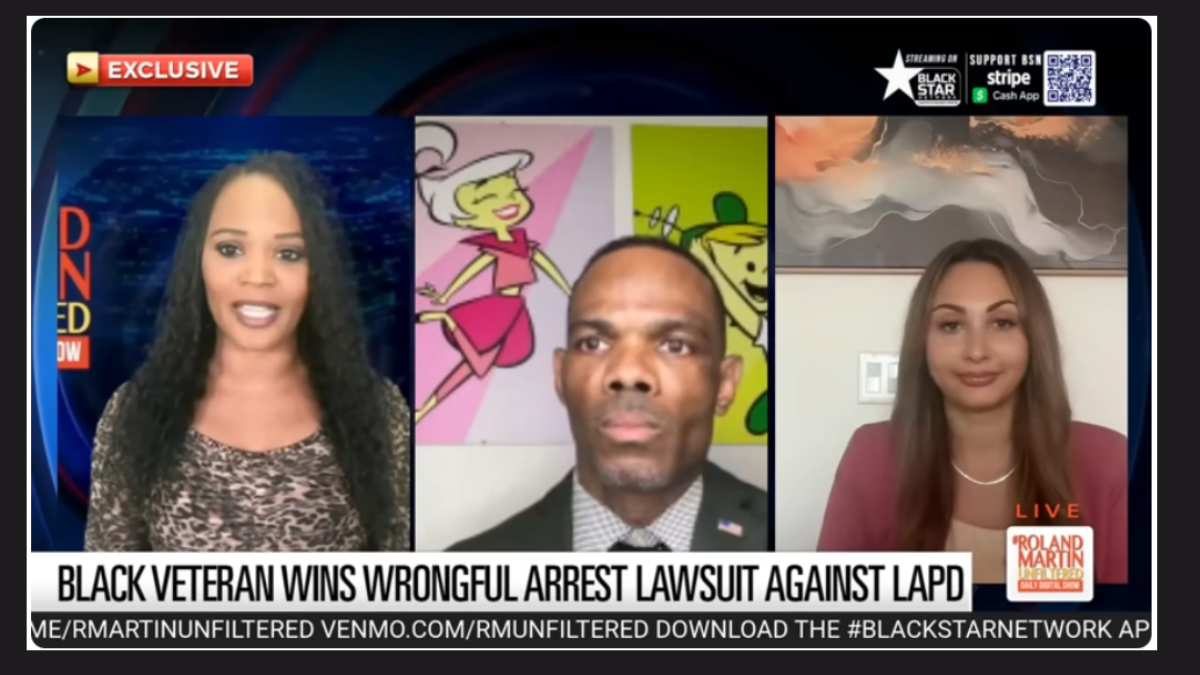
LOS ANGELES, Dec. 30, 2025 — A $6.8 million jury verdict has been rendered in favor of Slade Douglas. A man of honor, achievement, and service, the veteran was swatted by the VA, falsely arrested by LAPD Officers Jeremy R. Wheeler and Jeffrey H. Yabana, and subsequently subjected to forced hospitalization, drugging, and sexual assault.
“This verdict affirms that constitutional rights are not optional,” said Peter L. Carr IV, counsel for Slade Douglas.
The Honorable United States District Judge Maame Ewusi-Mensah Frimpong presided over the case.
What the LAPD attempted to frame as a “welfare check,” was in fact a government-initiated swatting, triggered according to evidence by a retaliatory call from the U.S. Department of Veterans Affairs after Douglas filed a discrimination complaint against the agency.
The National Archives and Records Administration later disclosed that the VCL intentionally deleted phone calls from that day, which contained false suicide allegations against Douglas.
By any measure, Slade Douglas was the kind of man America claims to honor. A U.S. Army veteran. A former law-enforcement officer with an impeccable record. A dual-sport NCAA athlete with sub-4.2 speed. A Golden Gloves boxer. A holder of multiple black belts and college degrees. A national-championship football player. A man whose record should have made him a national example, not a target.
But on August 27, 2019, that record became irrelevant. That day, armed officers from LAPD, Jeremy R. Wheeler and Jeffrey H. Yabana, acting under color of law, stormed Douglas’s home without a warrant, without probable cause, and without legal justification.
Douglas had committed no crime. He had no criminal record. There was no warrant.
And yet, Slade Douglas was disappeared. He was forcibly handcuffed and removed from his home. After the arrest, Officer Wheeler told him that the “worst thing he could do was make a 911 call right in front of the officers” and that it was against the law. And as Officer Jeremy R. Wheeler himself admitted: Douglas was arrested for calling 911.
What followed was premeditated. Officers Wheeler and Yabana, joined by Sergeant Andrew Kang and EMTs who confessed, carried out a plan to transport Douglas to PIH Good Samaritan Hospital, a facility contracted by the City, “to protect the City and officers from liability.”
At PIH Good Samaritan Hospital, Douglas was subjected to a horrific series of abuses. Officers coerced hospital staff into trying to find something in his system to justify the arrest, resulting in Douglas being forcibly injected with drugs while double handcuffed to a gurney, rendering him unconscious. Over the course of his captivity, he was injected nine times. Shackled in restraints, his limbs stretched out like a crucifixion, he was subjected to invasive blood draws, exhaustive toxicology tests, and brutal acts of sexual assault including forced catheterization. This was torture, carried out under color of law.
Once it was determined that Douglas had no drugs in his system, he was released from custody. This was not an accident, nor an isolated abuse.
What took place inside the hospital was not therapy but evidence fabrication designed to retroactively justify an unlawful arrest.
Douglas’s story is also the subject of a feature documentary, Slade Douglas v. City of Los Angeles — The Veteran They Tried to Silence, available at http://www.youtube.com/watch?v=X1Q99Er0n0Y.
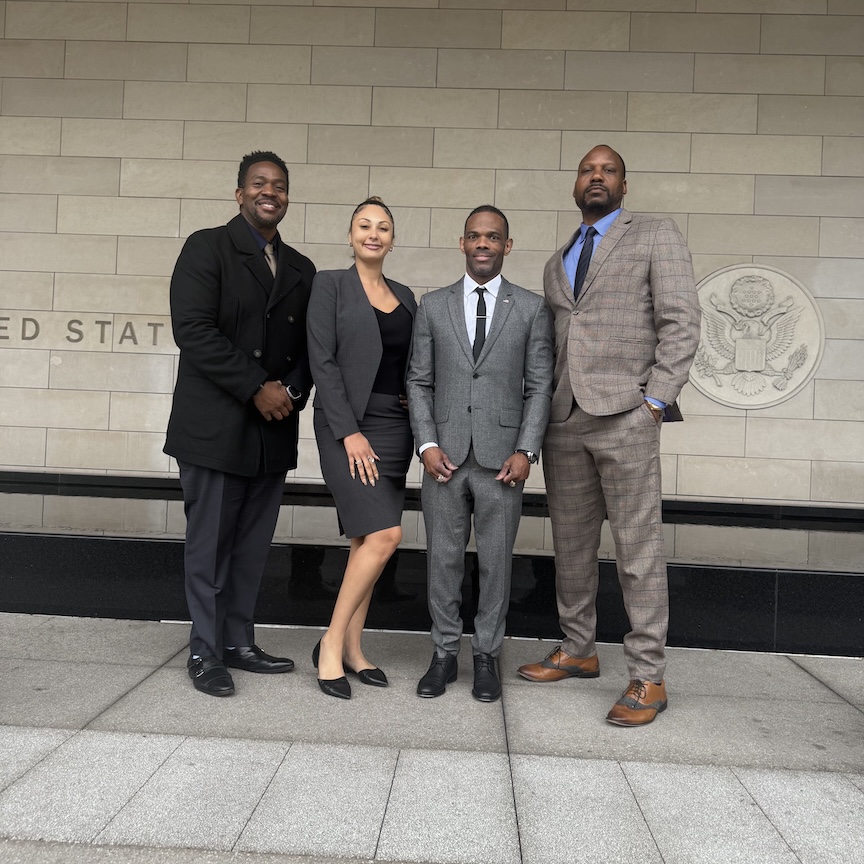
Douglas is represented by civil-rights attorneys Peter Carr, Lauren McRae, and Na’Shaun Neal.
Legal team pictured (l. to r.) Na’Shaun Neal, Lauren McRae, Slade Douglas and Peter Carr
Justice
Dec. 15 Trial Date Set for $30M Retaliation, Sexual Assault, and Torture Case Against LAPD and City of Los Angeles

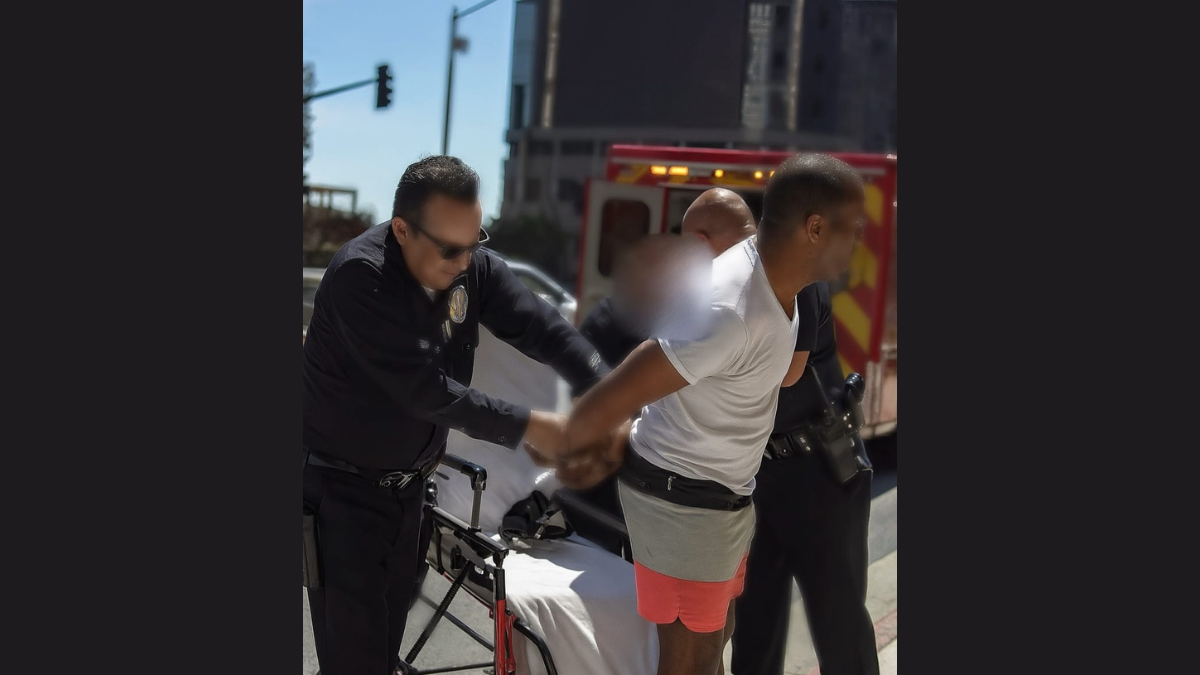
LOS ANGELES — What began as a VA-initiated swatting of U.S. Army veteran Slade Douglas escalated into false arrest, forced hospitalization, drugging, sexual assault, and torture by LAPD Officers Jeremy R. Wheeler and Jeffrey H. Yabana.
The trial is scheduled for December 15, 2025, in the U.S. District Court for the Central District of California, Los Angeles Division.
By any measure, Douglas was the kind of man America claims to honor. A U.S. Army veteran. A former law enforcement officer with an impeccable record. A dual-sport NCAA athlete with sub-4.2 speed. A Golden Gloves boxer. A holder of multiple black belts and college degrees, and a national-championship football player. A man whose record should have made him a national example.
His attorney, Lauren McRae, appeared yesterday on Roland Martin’s nationally syndicated show. Clips and content related to the case have already reached over 100 million views online.
Documentary:
Slade Douglas v. City of Los Angeles — The Veteran They Tried to Silence” can be viewed at www.youtube.com/watch?v=X1Q99Er0n0Y.
Douglas is represented by civil rights attorneys Peter Carr, Lauren McRae, and Na’Shaun Neal.


Courthousenews.com’s False and Defamatory Reporting Concerning Slade Douglas

Why Abdul El-Sayed Wants Corporate Money Out of Politics


